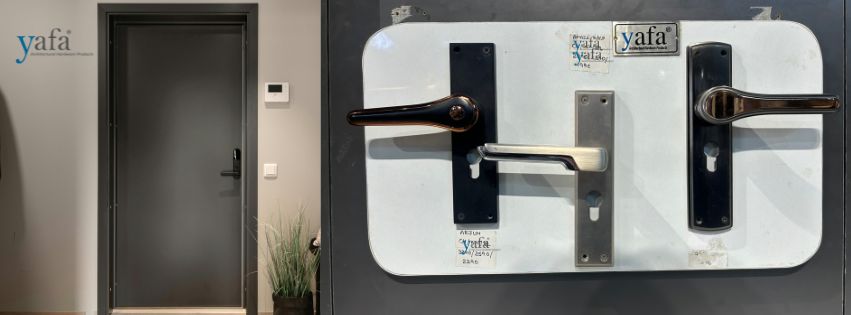
Complete Guide to the Different Types of Mortise Locks for Secure & Stylish Doors
Mortise locks combine strength, longevity and design flexibility. Whether you’re fitting a new front door, upgrading commercial entrances, or choosing locks for internal rooms, understanding types of mortise locks ensures you get the perfect balance of security and style.
This article covers lever, cylinder, deadlock, night latch, bathroom, hook and multi-point mortise lock types, plus finishes, installation tips and buying advice.
What is a Mortise Lock?
A mortise lock (or mortice lock) is a lock that fits into a pocket — the mortise — cut into the edge of a door. Yafa Mortise locks deliver superior strength and durability, as their mechanism fits inside the door — ensuring a secure fit, long-lasting performance, and a sleek, elegant look.
Why Choose a Mortise Lock?
- Durability: Robust internal hardware lasts longer than typical cylindrical locks.
- Security: Heavy-duty bolts and multiple locking points (in multi-point variants) resist forced entry.
- Design flexibility: Works with a wide range of handles, escutcheons and finishes.
- Serviceability: Modular parts (like cylinders) can be replaced without changing the whole lock.
Detailed Different Types of Mortise Locks
1. Lever Mortise Lock
Overview: Uses internal levers (typically 2–7 levers) to allow the bolt to retract only when the correct key aligns the levers. Classic in residential and heritage settings. Yafa offers premium Lever Mortise Locks crafted to perfection to match your doors.
Best for: Solid wood doors, traditional homes, and period restorations.
Pros: High mechanical security, simple to service.
Cons: Bulky case requires precise cutout.
2. Cylinder Mortise Lock
Overview: Uses a removable key cylinder (Euro or rim cylinder) that operates the mortise mechanism. Cylinder swaps make rekeying inexpensive and easy. Experience advanced security with Yafa’s Cylinder Mortise Lock, designed for modern doors. Its precision-engineered mechanism ensures smooth operation, long-lasting durability, and elegant style — a perfect blend of safety and sophistication.
Best for: Modern apartments, offices and locations where rekeying or master keying is required.
Pros: Fast rekeying, wide range of cylinder grades.
Cons: Cylinder security depends on quality and anti-snap features.
Read More: Mortise Lock vs Cylindrical Lock
3. Deadlock Mortise
Overview: Provides a single, strong deadbolt that cannot be operated by a latch — it must be keyed from outside and turned from inside in many designs. Also sold as deadlocks integrated into a mortise case. Yafa’s Deadlock Mortise Lock provides solid protection with a heavy-duty locking mechanism that resists tampering. Ideal for main doors and commercial spaces, it combines robust strength with refined aesthetics for reliable home security.
Best for: Front doors, commercial security doors.
Pros: High resistance to forced entry.
Cons: Not convenient for internal passage use since a key may be required.
4. Night Latch (Sash Lock) Mortise
Overview: Often called a night latch, it automatically deadlocks or latches when the door closes. Can usually be opened from inside without a key using a knob or lever.
Best for: Residential entrances where convenience and overnight security are desired.
Pros: Auto-lock function; easy egress from interior.
Cons: Security varies by model and supplemental deadlocking is recommended.
5. Bathroom/Privacy Mortise Lock
Overview: Designed for privacy rather than high security — these locks have a thumb turn on the inside and an emergency release on the outside.
Best for: Bathrooms, en-suites and private rooms.
Pros: Simple operation, discreet appearance.
Cons: Not suitable for external doors.
6. Hook Mortise Lock
Overview: Uses a hook-shaped bolt instead of a straight deadbolt — commonly found in sliding or glass doors to prevent lifting or jamming. Built for sliding and glass doors, Yafa’s Hook Mortise Lock offers smooth functionality with a sleek profile. Engineered for effortless operation, it ensures both elegance and safety — making it a smart choice for modern interiors.
Best for: Sliding doors, glass-panel doors and some aluminium-framed doors.
Pros: Prevents forced lifting; good for lightweight frames.
Cons: Less common for heavy timber doors.
7. Multi-Point Mortise Lock
Overview: Engages two or more locking points—top, middle and bottom—when the handle is lifted and the key turned. Multi-point mortise locks combine a central mortise case with ancillary hooks or bolts.
Best for: French doors, main entrance doors, and high-security installations.
Pros: Superior sealing, improved thermal and acoustic performance; exceptional security.
Cons: More complex installation and higher cost.
Comparison Table: Mortise Lock Types at a Glance
| Type | Primary Use | Security Level | Rekeying / Maintenance |
|---|---|---|---|
| Lever Mortise | Front doors, heritage | High | Moderate (mechanical parts) |
| Cylinder Mortise | Apartments, offices | High (with quality cylinder) | Easy (swap cylinder) |
| Deadlock Mortise | External security | Very High | Low (durable) |
| Night Latch | Residential convenience | Medium | Moderate |
| Bathroom Mortise | Bathrooms | Low (privacy) | Low |
| Hook Mortise | Sliding/glass doors | Medium | Low |
| Multi-Point Mortise | Main/large doors | Very High | Moderate (seasonal check) |
Finishes & Materials — Matching Locks with Design
Mortise locks are available in many finishes and materials to match door hardware and interior design. Popular finishes include:
- Satin Nickel — modern, low-reflective finish
- Polished Chrome — bright, contemporary look
- Antique Brass — classic and warm
- Matte Black — minimalist and striking
- PVD Gold & Dual Tone — premium and corrosion-resistant
Choose finishes that complement handles, hinges and other visible hardware for a cohesive look.
Read More: Top 7 Trending Mortise Door Handle Finishes for Modern Homes
How to Choose the Right Mortise Lock
Follow this checklist when selecting a mortise lock:
- Purpose: Is it for entry security, privacy, or sliding doors?
- Door material & thickness: Some mortise cases require a minimum thickness (check manufacturer specs).
- Cylinder & keying: Choose anti-snap, anti-drill cylinders or master-key systems if required.
- Aesthetics: Match finishes to existing hardware for a polished look.
- Standards & Certifications: Look for BIS/EN/ANSI grading depending on region and application.
- Installation: Professional installation is recommended for alignment and longevity.
Installation & Maintenance Tips
- Measure door thickness and backset before buying.
- Use a template provided by the manufacturer for accurate mortise cutting.
- Lubricate moving parts once a year with a graphite or dry PTFE lubricant (avoid oil for cylinders).
- Check screws and strike plates periodically — tighten if needed.
- Replace worn cylinders or latch components instead of the entire case where possible.
Common Questions (FAQ)
Are mortise locks better than cylindrical locks?
For heavy-duty security and longevity, yes — mortise locks generally outperform cylindrical locks because they have larger internal components and sit inside the door for stronger fixing.
Can I replace a mortise cylinder myself?
Yes, cylinder mortise locks are designed for easy cylinder replacement. However, if you have anti-snap or protected cylinders, follow manufacturer instructions or ask a locksmith.
Do multi-point mortise locks work on wooden doors?
Yes — but ensure your door and frame are reinforced and of sufficient thickness. Multi-point systems rely on precise alignment and sturdy materials.
Buying Guide — What to Look For
When buying a mortise lock, consider:
When choosing the perfect mortise door lock, focus on build quality, finish, and durability. Yafa, one of India’s best brands for mortise locks, combines elegant design with unmatched security — making every door a statement of style and strength.
- Brand reputation: Choose established hardware brands with warranty and spare parts availability.
- Security features: Anti-snap, anti-drill, hardened bolts.
- Finish durability: PVD and electroplated finishes offer better corrosion resistance.
- Compliance: Conformity to local security standards where applicable.
Conclusion
Understanding the different types of mortise locks helps you make a purposeful choice — whether you need privacy for a bathroom, convenience for a residential entrance, or top-tier security for commercial doors. Match the lock type to the door, choose the correct cylinder and finish, and schedule professional installation for best results.
If you are looking for premium mortise handles and locks in India, explore Yafa’s range of architectural hardware — designed for modern homes and commercial projects. Yafa is the leading architectural hardware manufactures and suppliers, which provides the best mortise door locks in india. Contact Yafa for mortise locks & hardware
Leave a Reply